
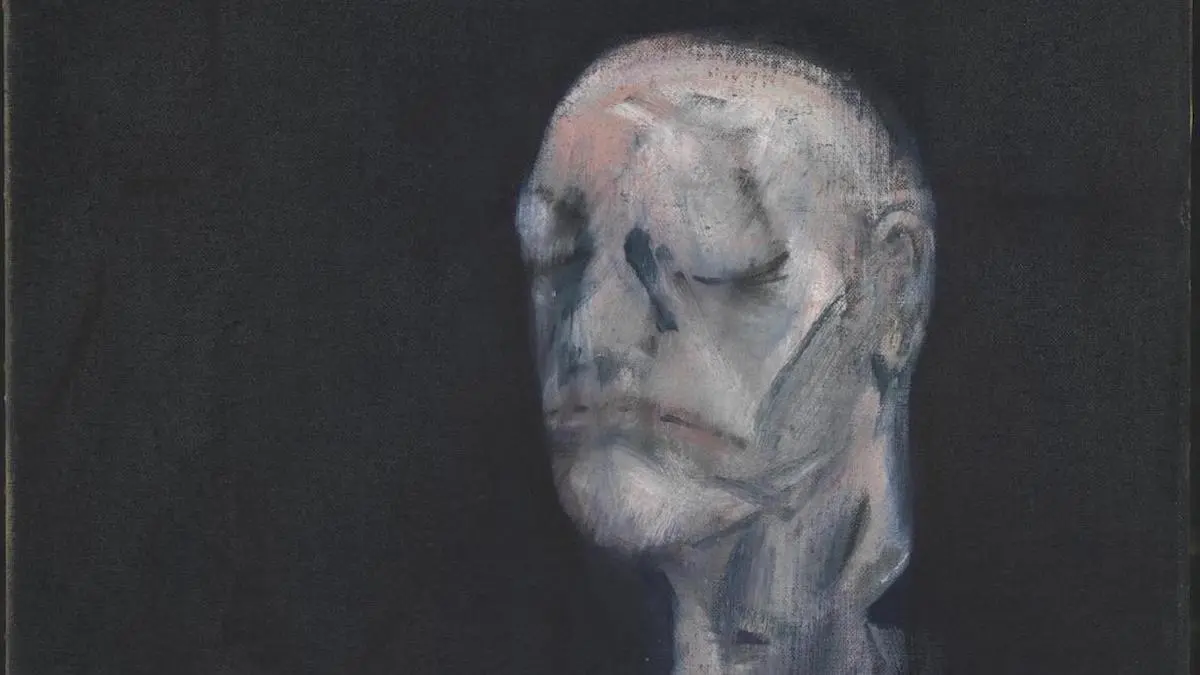
Where sin originally came from, and how and why it came forth, are mysteries the Bible never fully explains.
That’s not a gap in the record. It’s a clue about what sin actually is.
Sin is against the will of God but never outside of or beyond the will of God.
Not From God — But Not Outside His Allowance
Evil could not have come from a perfectly good God. But by creating a world into which evil could emerge, and did indeed enter, God created the possibility of sin.
Being all-knowing, it came as no surprise to him. Sin was contained within his decree. He deliberately decided to allow it. ‘All “permission” is an act of God’s will; he willed to permit it.’1Bavinck, Reformed Dogmatics. Abridged, 348. Its emergence was clearly within his counsel.2Bavinck, Reformed Dogmatics. Abridged, 340.
But — and everything hangs on this — the Creator’s intention in permitting evil, and at some level willing it, is a good intention.
We say ‘good’ because God is himself nothing but Good, the source of all goodness and being and meaning. God is, as it were, Good with a capital G.
Why You’ll Never Get a Tidy Answer
Here’s why the question resists a full explanation.
Sin and evil are a rebellious flight away from God — and therefore away from all goodness and meaning, into darkness and ultimate unintelligibility. Put another way: because they are in flight from God, sin and evil are irrational.
So we cannot hope for any final, rational knowledge of sin and evil in the way we can for faith in God, or righteousness, or love. Paul cautions us here: ‘be wise as to what is good and innocent as to what is evil’ (Rom 16:19). We can only view the existence of sin in the light of God’s goodness — and even then with caution, because in the end sin is incomprehensible.3Thanks to Robert Doyle for commenting here.
If you’ve ever tried to make sense of something appalling and found the reasoning gave out, that isn’t a failure of intelligence. It’s the subject matter.
God Judged It Better to Permit It Than Forbid It
Augustine’s handling of this is not unhelpful. ‘For the Omnipotent God … would not allow any evil in his works, unless in his omnipotence and goodness, as the Supreme Good, he is able to bring forth good out of evil.’4Augustine, Enchiridion, 3.11; trans. Outler, 342. See ‘Great Truths: The Creation of the Universe. 6. God’s Motive in Creating the Universe’ https://www.greattruthsglobal.org/the-creation-of-the-universe/
The Creator ‘foreknew that evil things would arise out of good,’ and that it would then be for ‘his most omnipotent goodness even to do good out of evil things rather than not to allow evil things to be at all.’5Augustine, A Treatise on Rebuke and Grace, 10.27; Nicene and Post-Nicene Fathers 1:5, ed. Philip Schaff (Christian Classics Ethereal Library [Orig. 1886]), 482.
Read that slowly, because it’s the hinge. Augustine is saying God judged it better to bring good out of evil than to permit no evil at all.
‘[T]he God and Lord of all things,’ he explained, ‘so ordained the life of angels and men that in it he might first of all show what their freedom was capable of, and then what the kindness of his grace and the judgment of his righteousness was capable of.’6Augustine, A Treatise on Rebuke and Grace, 10.27; Nicene and Post-Nicene Fathers 1:5, 482.
So God willed the prospect of sin and fall, because it was preferable that sin should exist and be overcome by God than that sin should never exist at all.
Yes, that’s paradoxical. Sin is against the will of God but ‘never outside of or beyond’ it.7Anthony A. Hoekema, Created in God’s Image (Eerdmans, 1986), 132. God wills different things in different ways.
‘As the Supreme Good, he made good use of evil deeds … In [the] very act of going against his will, his will was thereby accomplished. … [I]n a strange and ineffable fashion even that which is done against his will is not done without his will. For it would not be done without his allowing it — and surely his permission is not unwilling but willing — nor would he who is good allow the evil to be done, unless in his omnipotence he could bring good even out of evil.’8Augustine, Enchiridion, 26.100; trans. Outler, 399.
Nobody Was Made to Sin
None of which means God compelled or made anyone to sin.
‘For just as He is the Creator of all natures, so He is the giver of all powers. Not of all wills, however; for wicked wills certainly do not come from Him, because they are contrary to nature, which does come from Him.’9Augustine, The City of God Against the Pagans, 5.9; ed. and trans. R. W. Dyson (Cambridge University Press, 1998), 202-203.
At the same time, the sinful choices of God’s creatures remain subject to God’s will; ‘they have no power except what He has granted.’10Augustine, The City of God, 5.9; trans. Dyson, 203.
And in allowing sin to occur, God’s purpose is to overthrow it, outdo it, outbid it, overcome it, and bring greater good out of it. Because in the process of overcoming sin, God shows the difference between sin and its opposite — between disobedience and obedience, mistrust and trust, unbelief and faith.
‘He arranged things to demonstrate in the experience of the intelligent creation, human and angelic, how great a difference there is between the private conceit of the creation and the Creator’s protection. … God preferred to leave [the possibility of sin] in their own power, and thus to show both what evil could be accomplished by their pride, and what good could be accomplished by his grace.’11Augustine, The City of God, 14:27; cf. alternative trans. Dyson, 629-30.
Sin Is a Parasite
Creation and fall are completely different things. Sin can’t be attributed to the nature of creation, and it can’t be blamed on God.
Out of absolutely nothing God created a ‘very good’ world (Gen 1:31). Sin had no part in the original nature of created things. ‘God made man upright’ (Eccl 7:29); his human creatures came into existence in innocence, in an entirely excellent environment.
Which gives us the decisive point about what sin is. ‘The evil can therefore only come after the good, can only exist through and on the good, and can really consist of nothing but the corruption of the good.’12Herman Bavinck, Our Reasonable Faith, trans. Henry Zylstra (Eerdmans, 1956), 229.
Sin is parasitic. ‘The good is necessary even for evil to exist.’13Bavinck, Reformed Dogmatics. Abridged, 340. So sin is clearly not a condition of created nature but the desecration of it.
Think about how that works in practice. Evil has nothing of its own to build with. A lie needs truth to be a lie at all. Cruelty depends on the real value of the person being harmed. Strip away the good and there’s nothing left for evil to be.
Which leaves us with a formulation that holds both sides at once: ‘To the extent that it clearly falls within God’s purpose and will, we could say that up to a point and in some sense it had to be there. But then certainly it always had to be there as something that ought not to be there and has no right to exist.’14Bavinck, Reformed Dogmatics. Abridged, 352. Refer here to John Calvin’s scattered discussion of God’s secret and incomprehensible will, e.g., Institutes of the Christian Religion, trans. Ford Lewis Battles (The Westminster Press, 1960), 1.17.2 (212-13 note 4); 1.18.1-4 (228-237); 3.20.43 (906); 3.24.17 (985-87); all page numbers are from Battles’ translation. See Paul Helm’s various discussions of this, e.g., in Calvin: A Guide for the Perplexed (T&T Clark, 2008), 89-92; John Calvin’s Ideas (Oxford University Press, 2004), 106, 301, 312-13.
—
- 1Bavinck, Reformed Dogmatics. Abridged, 348. ↩︎
- 2Bavinck, Reformed Dogmatics. Abridged, 340. ↩︎
- 3Thanks to Robert Doyle for commenting here. ↩︎
- 4Augustine, Enchiridion, 3.11; trans. Outler, 342. See ‘Great Truths: The Creation of the Universe. 6. God’s Motive in Creating the Universe’ https://www.greattruthsglobal.org/the-creation-of-the-universe/ ↩︎
- 5Augustine, A Treatise on Rebuke and Grace, 10.27; Nicene and Post-Nicene Fathers 1:5, ed. Philip Schaff (Christian Classics Ethereal Library [Orig. 1886]), 482. ↩︎
- 6Augustine, A Treatise on Rebuke and Grace, 10.27; Nicene and Post-Nicene Fathers 1:5, 482. ↩︎
- 7Anthony A. Hoekema, Created in God’s Image (Eerdmans, 1986), 132. ↩︎
- 8Augustine, Enchiridion, 26.100; trans. Outler, 399. ↩︎
- 9Augustine, The City of God Against the Pagans, 5.9; ed. and trans. R. W. Dyson (Cambridge University Press, 1998), 202-203. ↩︎
- 10Augustine, The City of God, 5.9; trans. Dyson, 203. ↩︎
- 11Augustine, The City of God, 14:27; cf. alternative trans. Dyson, 629-30. ↩︎
- 12Herman Bavinck, Our Reasonable Faith, trans. Henry Zylstra (Eerdmans, 1956), 229. ↩︎
- 13Bavinck, Reformed Dogmatics. Abridged, 340. ↩︎
- 14Bavinck, Reformed Dogmatics. Abridged, 352. Refer here to John Calvin’s scattered discussion of God’s secret and incomprehensible will, e.g., Institutes of the Christian Religion, trans. Ford Lewis Battles (The Westminster Press, 1960), 1.17.2 (212-13 note 4); 1.18.1-4 (228-237); 3.20.43 (906); 3.24.17 (985-87); all page numbers are from Battles’ translation. See Paul Helm’s various discussions of this, e.g., in Calvin: A Guide for the Perplexed (T&T Clark, 2008), 89-92; John Calvin’s Ideas (Oxford University Press, 2004), 106, 301, 312-13. ↩︎