
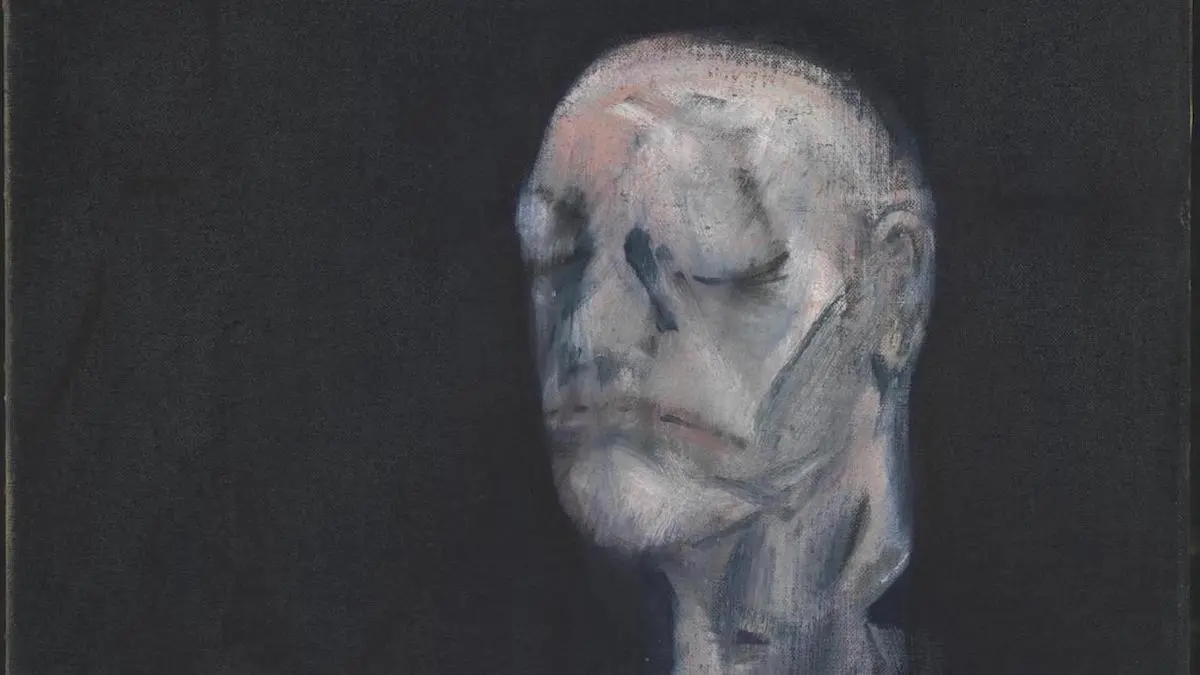
The essence of human life is a fullness of loving personal relations. Communion with God and fellowship with others is what it means to be at home in the world. Sin is the activity that ruins that.
Sin makes us strangers to God, strangers to one another, strangers even to ourselves.
A Long Way From Home
Objective relational breakdown results in a fixed state of separation from God (Isa 59:2). Look at the pattern: Adam and Eve expelled from Eden (Gen 3:23-24); Cain moving away from God’s presence after murdering his brother (Gen 4:16); Israel cast out into exile (2 Ki 24:20).
These symbolise human estrangement — foreigners in a ‘far country’ (Luke 15:13). Divorced from their Creator, sinners are confused, disoriented, a long way from home.
Distance Isn’t the Right Word
Separation is too light a term for the ruin sin produces. Sin doesn’t just put us at a distance from God — it alienates us. If loving fellowship is the purpose of being human, alienation is sin’s primary relational effect.
Paul speaks of people outside Christ as ‘separated’ (Eph 2:12) — but more, as ‘strangers and aliens,’ ‘alienated from the life of God’ (Eph 2:19; 4:18). Elsewhere he links estrangement with aggression: ‘alienated and hostile in mind’ (Col 1:21).
So alienation is separation plus enmity toward him — and bound up in it is alienation from other people, with its mixture of paranoia and aggression. As sinners we are ‘enemies’ of God, whose animosity is so deeply seated that reconciliation required the death of Christ (Rom 5:10).
Helpless, Not Just Weak
That alienation leaves us in total helplessness. A ‘mind set on the things of flesh’ cannot know God, obey God, or please God — and there’s nothing we can do about it on our own (Rom 8:6-8). We ‘cannot do, say, or think that which totally meets with God’s approval … [or] change the basic direction of [our lives] from sinful self-love to love of God.’1Hoekema, Created in God’s Image, 152.
Some of us are perfectly capable of outwardly respectable lives. But on our own we’re incapable of choosing God. Though we may think otherwise, we don’t instinctively desire him; our inclinations drive toward love of self rather than love of God and others. ‘Unless a man is born again, he cannot see … [or] enter the kingdom of God’ (John 3:3, 5).
Enslaved, and Yet Responsible
Sin shackles and enslaves the will (John 8:44), holding fallen humanity in bondage to impurity and lawlessness (Rom 6:16-19).
Scripture describes sin’s operation in strikingly personal terms. It ‘reigns’ (Rom 5:20), may be ‘obeyed’ (Rom 6:16), pays ‘wages’ (Rom 6:23), ‘deceives’ (Rom 7:11), and kills (Rom 7:13). We may want to do what’s right but can’t accomplish it alone. Because ‘nothing good dwells within’ us, despite our best intentions we do the evil we don’t want to do (Rom 7:17-19).
‘Man, by his fall into a state of sin, has wholly lost all ability of will to any spiritual good accompanying salvation: so as, a natural man, being altogether averse from that good, and dead in sin, is not able, by his own strength, to convert himself, or to prepare himself thereunto.’2The Westminster Confession of Faith, 9.3; Schaff, Creeds, 3:623.
Now hold two things together that don’t sit comfortably. We are victims of sin, since being enslaved we sin necessarily. We are also villains, because sin remains our responsibility.
‘We are victims in the sense that the sinful situation of fallen humanity into which we are born … is a situation for which we are not personally responsible. Yet we are responsible, willing victims, who have willingly thrown in our lot with a rebellious race … There are two extremes to be avoided here: (1) emphasis on the sinful situation in which we find ourselves as a move to avoid our personal responsibility and guilt, and (2) placing weight on our personal responsibility to the point that we might begin to think that sin can be escaped by mere effort.’3Jeremy Begbie, Theology B, Unpublished Lecture Notes.
Why Self-Improvement Can’t Reach It
Changing habits may improve our circumstances. It won’t improve our attitude toward God or change the broken condition of our relationship with him.
It’s certainly possible to modify behaviour — social pressure, fashion and duty all prompt it, and certain sins may be subdued. But that’s a holding operation. It doesn’t cleanse, eradicate, or remove; the root problem simply surfaces later in another form.
Behaviour modification is not renewal. Regulation is not restoration. Suppression is not transformation.
In relation to God, sinful people are powerless. God must act (Isa 59:16; Rom 5:6). For anyone to trust in ‘Jesus Christ and him crucified’ requires God’s revelation and the Spirit’s work (1 Cor 2:2, 10).
Sin makes us not merely short-sighted but blinded to God’s truth (2 Cor 4:4), producing such inability to distinguish moral realities that people approve of evil as if it were good (Rom 1:24-32). Only through the Spirit can we see ‘the light of the gospel of the glory of Christ’.
Whose Territory This Is
One more layer. This hostility doesn’t operate on the human level alone — hatred of God began in the mind and will of the devil and his angels. The source and scale of sin is satanic, and sin itself has a demonic nature.
The realm of sin lies within Satan’s power. Each sin gains its energy from the devil, and outside of Christ each sinner lies under his power. That’s why he’s called ‘the ruler of this world’ (John 16:11) and ‘the god of this world’ (2 Cor 4:4). His whole kingdom is built on sin.
Servitude to sin entails the fallen will being ‘subject to the devil’s power and … stirred up by it.’4Calvin, Institutes, 2.4.1; 310. That servitude is necessary, since we can’t resist it, yet also willing: it doesn’t happen against the grain of our decisions, but with our consent.
But — decisively — Satan’s power lies within God’s sovereign providence. ‘The history of the world is not a blindly operating evolutionary process, but an awful drama, a spiritual struggle, centuries-long in duration, a warfare between the Spirit from above and the spirit from below, between Christ and the anti-Christ, between God and Satan.’5Bavinck, Our Reasonable Faith, 248.
Trusting Christ, our lives ‘are not in Satan’s hand but in God’s … toward the end of history, [he will] be exposed and vanquished’ (Rev 19:20).6Bavinck, Reformed Dogmatics. Abridged, 390.
Which returns us to where this began. Sin lies within the allowance of God, and his purpose in permitting the rebellion of his creatures is precisely to bring greater good out of it — exposing and overcoming it in order to reconcile, rescue, restore and renew them by the person and work of Jesus Christ.