Author: Benjamin Dean

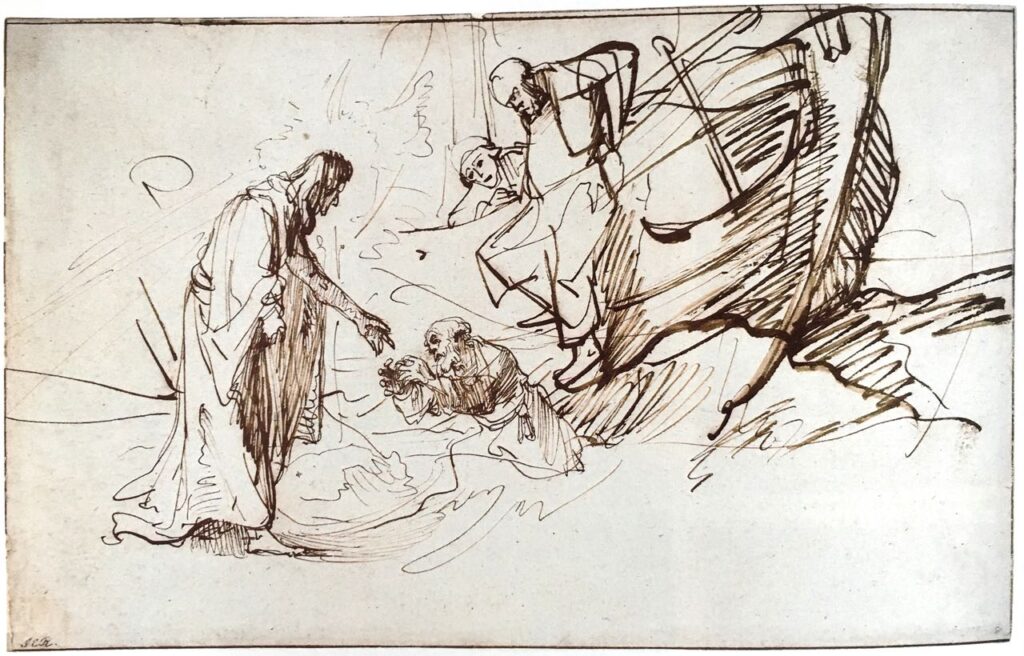
The Lord Jesus cannot be assessed apart from his miracles — indeed, he can only be properly understood by close attention to them. The Gospels of the New Testament are replete with accounts of Christ’s ‘mighty works’, and the Acts of the Apostles extends this testimony through repeated, smaller scale yet still astonishing miraculous deeds.
The chapter’s opening expression, ‘In the beginning, God’ tells us that, before anything else existed, God was and always had been. Unlike everything else, God was before creation.
Having established God as the Sovereign Creator in Genesis 1, it is unsurprising that the rest of the Bible’s plotline builds on this foundational truth. Three of the principal ways in which it does so are set out below. Each passage of Scripture mentioned below is worth studying in more detail. 
Genesis 1 is carefully structured as a piece of literature. Two main steps may be observed.
Having moved permanently to Tahiti in 1895, the French artist, Paul Gauguin, painted his monumental work, D’ou Venons Nous/ Que Sommes Nous / Où Allons Nous, which translates into English as: Where do we come from? What are we? Where are we going?
Earlier we touched on the nature of the gospel at some length; it is worth pausing to register its heart again here, allowing the impression to settle afresh.
The final and perhaps most surprising aspect of God's holiness is what we might call his ‘fellowship-holiness’ — the truth that God's holiness is not only a barrier to relationship but the foundation of it.
When most people think of holiness, they think primarily of moral purity — and they are not wrong.
When Scripture speaks of God's holiness, it often does so in language that emphasizes his absolute majesty and transcendence. This is what we might call God's "majesty-holiness" — the aspect of his holiness that sets him infinitely above and beyond all creation. This divine majesty can seem intimidating, even terrifying. Yet paradoxically, it is precisely God's absolute transcendence that makes him able to help us in ways that no one else can.
When Scripture declares ‘Holy, holy, holy is the LORD Almighty’ (Isa 6:3), it is not simply giving God a threefold emphasis for dramatic effect. Many biblical scholars have seen in this triple declaration a hint of the Trinity — the holiness of the Father, the Son, and the Holy Spirit. God's holiness is not an abstract divine attribute but the perfect life of the triune God: three Persons in one essence, existing in eternal communion of love.
One of the most fundamental aspects of God's holiness is what we might call his ‘difference-holiness’ — the reality that God is wholly other than his creation, utterly unlike anything else that exists. This difference is not accidental or arbitrary; it is essential to who God is. And paradoxically, it is precisely because God is so utterly different from us that he can be so completely for us.

Sign-up

* = required
Name
Consent