Category: Article

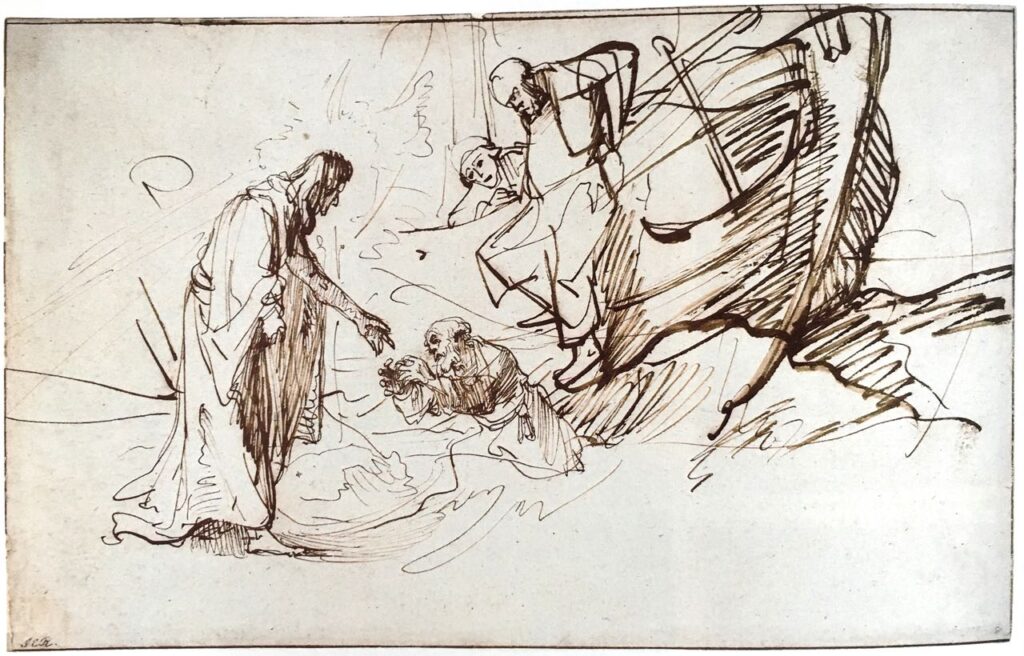
The Lord Jesus cannot be assessed apart from his miracles — indeed, he can only be properly understood by close attention to them. The Gospels of the New Testament are replete with accounts of Christ’s ‘mighty works’, and the Acts of the Apostles extends this testimony through repeated, smaller scale yet still astonishing miraculous deeds.
The chapter’s opening expression, ‘In the beginning, God’ tells us that, before anything else existed, God was and always had been. Unlike everything else, God was before creation.
Having established God as the Sovereign Creator in Genesis 1, it is unsurprising that the rest of the Bible’s plotline builds on this foundational truth. Three of the principal ways in which it does so are set out below. Each passage of Scripture mentioned below is worth studying in more detail. 
Genesis 1 is carefully structured as a piece of literature. Two main steps may be observed.
Having moved permanently to Tahiti in 1895, the French artist, Paul Gauguin, painted his monumental work, D’ou Venons Nous/ Que Sommes Nous / Où Allons Nous, which translates into English as: Where do we come from? What are we? Where are we going?
Earlier we touched on the nature of the gospel at some length; it is worth pausing to register its heart again here, allowing the impression to settle afresh.
A full survey of Christ's earthly teaching career lies beyond our scope here. Yet it is worth pausing, however briefly, to consider some broad characteristics of Jesus' overall attitude and outlook — for these inform and illuminate the nature of the gospel he promoted.
What do you think of when someone calls God holy? What does it mean when we, following the Bible, affirm that God is holy?
God's blessedness is not something external or added to him, but arises from the fact that he is in himself the sum of all goodness and perfection. God’s goodness is identical with his perfection, and it is this perfection that grounds both his blessedness and his self-sufficiency.
Difference-holiness means that God is not like us but is utterly unique: he stands outside us and over against us as the objective reality to whom we must respond.
Making complex subjects simple is a genuine good - at least to the extent that it is possible. Simplicity seeks to make things easily understood. Yet true simplicity presents things clearly without over-simplification, which reduces them to the point of distortion. Achieving this balance is a rare and valuable skill.

Sign-up

* = required
Name
Consent