
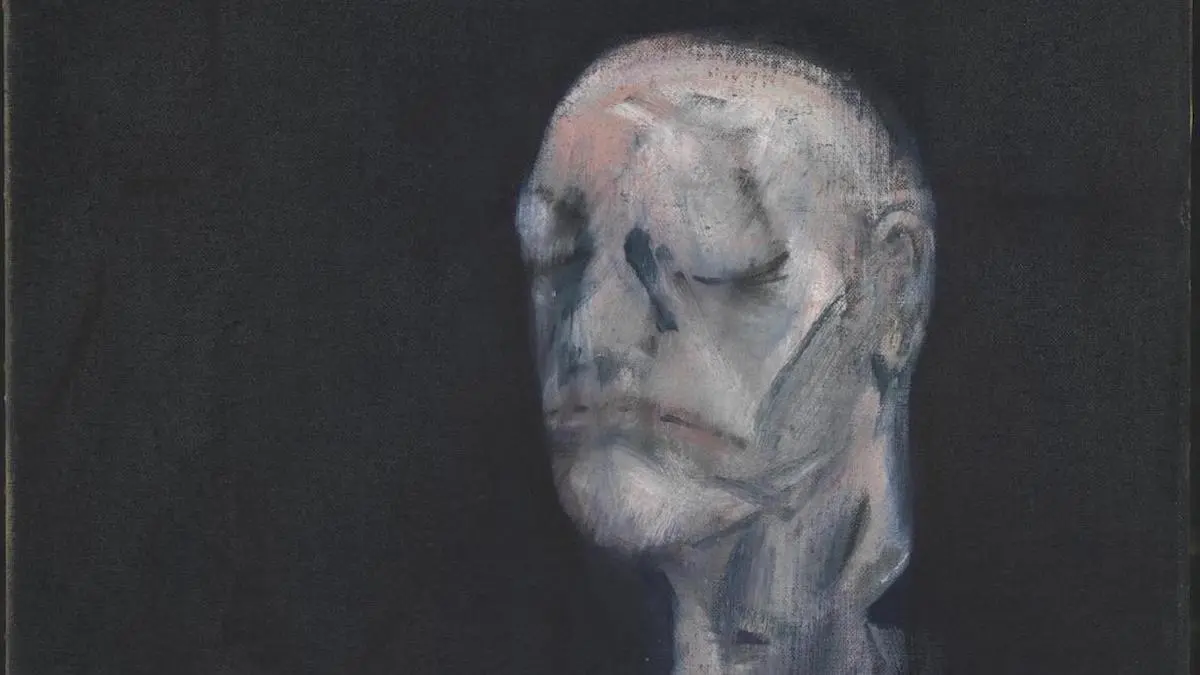
The world is full of contrasts you can’t reconcile.
Every human life begins in crisis, proceeds in conflict, and ends in irreversible loss. And yet there’s astonishing goodness. Between birth and death, breath-taking wonder sits next to utter misery, sublime beauty next to callous cruelty. Ecstatic joy and heart-capturing tenderness come bound up with terrible agony.
Life is far worse than we ever feared and much better than we dare dream.
The Thing Adults Know That Children Don’t
The human plight presents a mixed picture: absurdity and grandeur, splendour and pathology, terrifying madness and the tenderness of true love.
Children grow up believing the world is sane, sensible, ordered, moral. Adults recognise it isn’t. The world is neither fair nor ultimately friendly. Decay, injustice and rottenness run all the way through. And if death really is everyone’s absolute terminus, permanent health and satisfactory justice simply never happen.
‘History,’ wrote Joyce, ‘is a nightmare from which I am trying to awake. … The ways of the Creator are not our ways.’1James Joyce, Ulysses, with an Introduction by Declan Kiberd (Penguin Classics, 2000), 42.
In the Bible, as in life, tragedy is real. Even at Scripture’s high points there isn’t entirely ‘unclouded light.’2Stephen Williams, The Election of Grace: A Riddle without a Resolution? (Eerdmans, 2015), 209-210. There is a properly Biblical conception of tragedy.
The Word Nobody Wants
Coming to terms with life’s contradictions takes a lifetime. It also takes certain central ideas, handled with care. One of them is sin.
It’s very bad news, which makes it hard to accept and painful to consider. And the problem is circular: our very sinfulness prevents us understanding the truth about it.
But sin’s reality is so fundamental that across the whole span of the Bible’s storyline — hundreds of chapters, hundreds of thousands of words (757,349 in the English Standard Version) — only two brief passages, the opening and the closing, are actually without it. ‘Preoccupation with sin is one of the hallmarks of Biblical religion.’3Henri Blocher, ‘Sin,’ in New Dictionary of Biblical Theology [NDBT], eds. T. D. Alexander and B. S. Rosner (Inter-Varsity Press, 2000), 781.
So central is the idea that, from one angle, the whole Christian faith can be approached as a quest to analyse the problem and provide a solution to it.
The concept is also hard-wired into biblical wisdom — a basic tool for understanding the horrendous evils we face throughout the world, from others, and not least within ourselves. According to Scripture’s diagnosis, sin is the root problem. Life in this world is inexplicable without it, and without an accurate concept of sin we can’t understand ourselves.
A Dark Road That Leads Somewhere
Here’s the turn. Biblical teaching about sin is the point of departure for its teaching about salvation. ‘The primary purpose of Christ’s mission was to deal with sin.’4Blocher, ‘Sin’ [NDBT], 781. The very meaning of the name ‘Jesus’ says so: ‘he will save his people from their sins’ (Matt 1:21).
It sounds counterintuitive, but rigorous teaching about sin is a dark road to the light:
‘The Biblical view of sin could scarcely be more repellent to twenty-first century culture. We want to believe that we are basically good, that we can fix ourselves. We do not want to hear that we, in ourselves, are fundamentally misguided, totally corrupt, utterly helpless. Yet it is only when we come to realize we cannot fix ourselves that we will be prepared to look outside ourselves for help and to depend on Christ. Only when we know how great our problem is will we see how great the Saviour is (Luke 7:40-43). … The biblical view of sin is, therefore, the bringer of liberty, joy, and compassion when coupled with the announcement of its antidote — the gospel.’5ESV Systematic Theology Study Bible (Crossway, 2017), 1686.
You Can’t See This on Your Own
Now something that reverses the order you might imagine. The reality of God’s forgiveness ‘is the basis for the knowledge of our sinfulness.’6Herman Bavinck, Reformed Dogmatics: Abridged in One Volume, ed. John Bolt (Baker Academic, 2011), 344.
That needs stressing. Outside of Jesus Christ we may seem to have some knowledge of our failings, but, in reality, we are blind to our blindness.
So Christian knowledge of sin is itself an act of faith. To know sin properly it isn’t enough to look at yourself, because self-knowledge is uncertain and relative. Left to ourselves we grade on a curve. We compare ourselves to other people and conclude we are not that bad.
Christ’s ministry shows that sin is the truth of all human existence. Even the most religious people of his day were blind to who he was and why he came, accusing him of being a rank outsider, a Samaritan, demonised (John 8:48). The Old Testament had already testified to this self-blindness: ‘The heart is deceitful above all things, and it is desperately sick: who can know it?’ (Jer 17:9).
Sinning makes us slaves to sin, and that slavery includes deep blindness about who we really are and what God’s goodness really is. ‘Truly, truly, I say to you, everyone who practices sin is a slave to sin’ (John 8:34). And in exactly that context Jesus promised that ‘the truth will set you free’ — a truth found only in him, when we become his disciples: ‘If you abide in my word, you are truly my disciples, and you will know the truth, and the truth will set you free’ (John 8:31-32).
Outside of Jesus Christ we will be our own blind judges. It’s from Jesus that we learn what a human person is, what sin is, and what it means for humankind.
The Judge Who Rescues
Jesus Christ as Judge discloses the sinfulness of sin. He bears his winnowing fork in his hand, thoroughly purging his floor, gathering the wheat into his barn and burning the chaff with unquenchable fire (Matt 3:12).
But as Judge he also shows himself to be the Kingdom of God, the reign of God, the Lord among us — who redeems. It’s his judging of sin that gives us true insight into our sin and, above all, by his death and resurrection frees us from it.
That’s the position from which we can finally see straight. As the redeeming Judge, he lets us see ourselves as we really are. Calvin urged his congregation to learn to search out their want and need in the face of Jesus Christ.7John Calvin, Sermon on 1 Timothy 2:5-6, ‘Jesus Christ, Mediator and Man,’ in Sermons on 1 Timothy, trans. Robert White (Banner of Truth, 2018), 203-216. See also John Calvin, Sermon on Galatians 3:1-2, in Sermons on Galatians, trans. Kathy Childress (Banner of Truth, 1997), 219-234.
And this Jesus directs us to the Scriptures to illuminate our understanding (Matt 5:17-18; 2 Tim 3:14-17). The Bible’s whole approach to healing the human condition begins by helping us appreciate and accept what’s wrong with us. Recognising the problem enables understanding and appropriate action.
Biblical teaching concentrates on sin in order to present God’s remedy for it. So accurate understanding of sin and its consequences is vital to human welfare. The sharper our sense of sin, the deeper our appreciation of God’s grace in the Lord Jesus Christ.
‘Let us therefore recognize our wretchedness so as to find the cure.’8Calvin, Sermons on 1 Timothy; trans. White, 214. I am grateful to Robert C. Doyle for expansion of this point, and for a number of other very useful comments and suggestions about an earlier draft.
—
- 1James Joyce, Ulysses, with an Introduction by Declan Kiberd (Penguin Classics, 2000), 42. ↩︎
- 2Stephen Williams, The Election of Grace: A Riddle without a Resolution? (Eerdmans, 2015), 209-210. ↩︎
- 3Henri Blocher, ‘Sin,’ in New Dictionary of Biblical Theology [NDBT], eds. T. D. Alexander and B. S. Rosner (Inter-Varsity Press, 2000), 781. ↩︎
- 4Blocher, ‘Sin’ [NDBT], 781. ↩︎
- 5ESV Systematic Theology Study Bible (Crossway, 2017), 1686. ↩︎
- 6Herman Bavinck, Reformed Dogmatics: Abridged in One Volume, ed. John Bolt (Baker Academic, 2011), 344. ↩︎
- 7John Calvin, Sermon on 1 Timothy 2:5-6, ‘Jesus Christ, Mediator and Man,’ in Sermons on 1 Timothy, trans. Robert White (Banner of Truth, 2018), 203-216. See also John Calvin, Sermon on Galatians 3:1-2, in Sermons on Galatians, trans. Kathy Childress (Banner of Truth, 1997), 219-234. ↩︎
- 8Calvin, Sermons on 1 Timothy; trans. White, 214. I am grateful to Robert C. Doyle for expansion of this point, and for a number of other very useful comments and suggestions about an earlier draft. ↩︎