
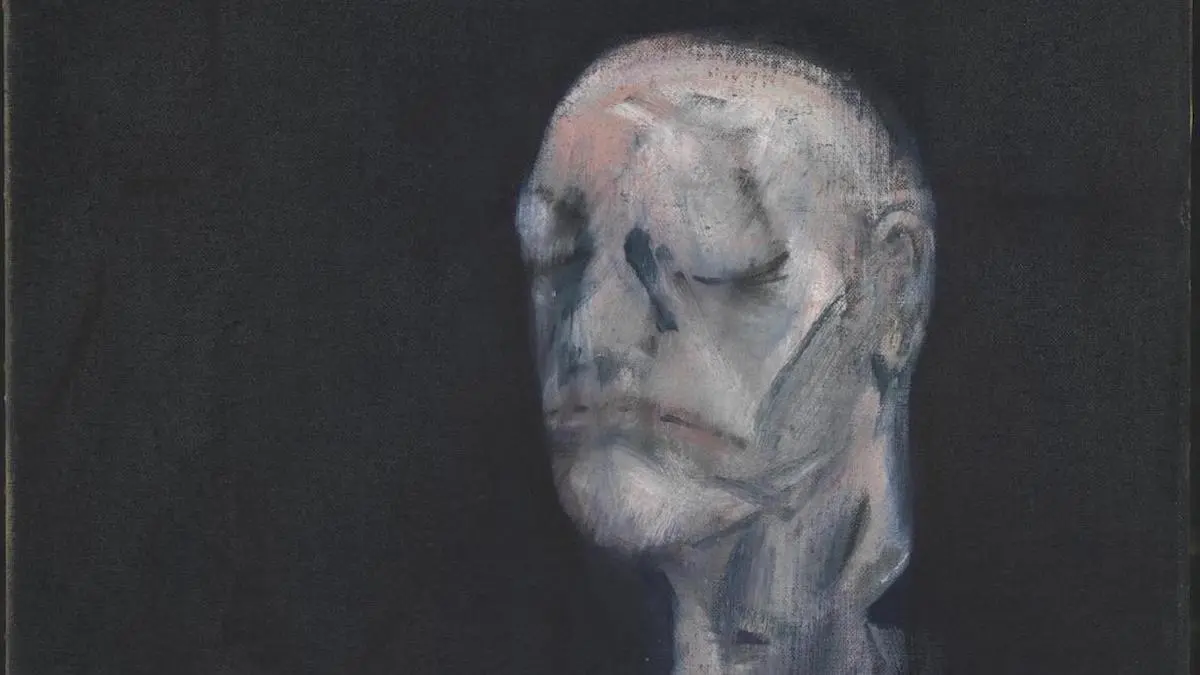
After the first human sin, the sentence lands: ‘to dust you shall return’ (Gen 3:19). But physical death doesn’t arrive immediately. It’s delayed — and other penalties are issued in advance.
Death is not a natural consequence of human nature. It’s the legal consequence of sin.
Everything That Came Before the Grave
Fear, guilt, shame, pain, curse, frustration, futility, waste, loss, grief, struggle, toil, banishment (Gen 3:7-24). Then soon after: envy, anger, malice, murder, lying, regret, fugitive-status, restlessness (Gen 4:8-16).
Agony and anxiety became constants — a kind of death in themselves, ‘a preparation for death, a continuous death.’1Bavinck, Our Reasonable Faith, 256. For everyone, ‘sin is crouching at the door’ (Gen 4:7). And into life came sorrow: ‘Cain went away from the presence of the LORD … east of Eden’ (Gen 4:16).
Sin and suffering are bound together. Evil results from sin, and suffering from evil. As an interim punishment came ‘the miseries of human life, from the first cries of infants to the final groans of the dying.’2Bavinck, Reformed Dogmatics. Abridged, 358. That doesn’t mean every particular suffering traces to some particular sin, though a good deal does. But the two are connected, and because of the evil sin causes, suffering is inevitable and universal.
Nobody Escapes This
Pain is so integral to sinful experience we can barely imagine living without it. Some miseries follow from personal wrongdoing, but much — most, even: accidents, aging, illness — is beyond individual control. And because of ‘the central place humans occupy in creation,’3Bavinck, Reformed Dogmatics. Abridged, 387. the entire natural world got caught up in the effects of human sin. The ‘ground’ itself is cursed (Gen 3:17), the whole order of creation subjected to futility (Rom 8:20).
Scripture offers no overall explanation of suffering valid for every situation. But the connection between suffering and sin remains. Pain, like death, has always been normal in fallen experience — while in terms of created human nature it’s abnormal.
Existence in a world of sin can be very unfair, since not just the guilty but the innocent suffer. Which is why God’s wrath is to be welcomed: it sets its face against this, punishing injustice and pointing to its removal — though we do well to ‘welcome’ it with trembling.4Thanks to Robert Doyle for elaboration here.
Not Heaven, Not Hell — Somewhere Between
God’s life-giving intention doesn’t disappear, though. From the first, his preservation extends even to the murderous (Gen 4:15). So the fallen condition holds the best and worst together. ‘The earth on which we live is not a heaven but it is not a hell either. It stands between the two and has something of the quality of each.’5Bavinck, Our Reasonable Faith, 257.
Human life is corrupted but not instantly dissolved. God’s goodness provides conditions appropriate to fallen humanity in all its magnificence and squalor — otherwise we wouldn’t survive. His mercy remains ‘over all that he has made’ (Psa 145:6).
Suffering is neither original nor ultimate in God’s purposes. With the new creation he promises to ‘wipe away every tear … and death shall be no more’ (Rev 21:4). Until then, tragedy threatens every moment.
Death Is a Sentence, Not a Process
The full penalty for sin is a living death, in which spiritual death precedes physical death and culminates in eternal death (John 8:24).6Augustine speaks of fallen human nature as a state of living death in The City of God, 13.10-11; trans. Dyson, 550-54.
In Scripture, death derives from the judgment of God — punishment for disobedience. ‘The wages of sin is death’ (Rom 6:23). It’s appointed by God as the payment for sin, since ‘from the power of the law and by its sanction was it ordained that man should die once.’7Francis Turretin, Institutes of Elenctic Theology, trans. George Musgrave Giger, ed. James T. Dennison (P&R Publishing, 1992), 5.8.7, 1:460.
Death is devastating, and people fear it. We may try to deny it, deconstruct it, distract ourselves from it — and though it can sometimes be postponed, it’s impossible to prevent. And it’s exactly this, death as divine punishment for sin, that the serpent contradicts (Gen 3:3).
Which Is Why It Feels Wrong
Because of that, the Bible portrays death as unnatural and terrible. Had humanity not sinned it would not have been necessary. It’s not a natural consequence of human nature but the legal consequence of sin: ‘the termination of a miserable life shall be death. … For this accursed life of man could be nothing else but the beginning of death.’8Calvin, Commentaries on Genesis, 1:179.
Even when the very wicked die, God takes no pleasure in it (Ezek 18:23). Only Enoch and Elijah are spared (Gen 5:24; 2 Kgs 2:11). Death is likened to a shroud ‘cast over all peoples’ (Isa 25:7). ‘The bodies of men, after death, return to dust, and see corruption’9The Westminster Confession of Faith, 32:1; Schaff, Creeds, 3:670. — the soul separating from the body, since ‘souls (which neither die nor sleep), having an immortal subsistence, immediately return to God who gave them.’10The Westminster Confession of Faith, 32:1; Schaff, Creeds, 3:670. And it is depicted as tyrannical rule (Rom 5:14), the dominion of the devil, ‘the one who has the power of death’ (Heb 2:14).
Death Isn’t the Same as Being Erased
A distinction is worth holding. Annihilation is to be erased from existence, rubbed out. Death is punishment, misery, separation, torment11Bavinck, Our Reasonable Faith, 259. — an inherently destructive force.
For the godly, whatever the process of dying, death itself may be peaceful (Gen 25:8), likened to a homecoming or falling asleep (1 Cor 15:20). For the believer it marks a transition to something better with Christ (Phil 1:21). Yet it remains undesirable, because through it the body is painfully destroyed (2 Cor 5:1), along with all connection to the goods and loves of this world.
Since ‘the deepest meaning of life is fellowship with God, the deepest meaning of death must be the disruption of … fellowship with God … and this disruption is spiritual death. … [E]very human being since the Fall is born in a state of spiritual death … [and] also became subject to … eternal separation from the loving presence of God.’12Hoekema, Created in God’s Image, 138-39.
Three Kinds, One Destination
So sin produces three forms of death. Spiritual death — the end of fellowship with God and his people. Physical death — the breakdown of bodily function, the body’s separation from the soul. Eternal death — the irretrievable cessation of contact with God and all good.
All three terminate in hell, a permanent state combining everlasting banishment, destruction and punishment.13Christopher Morgan, ‘Biblical Theology: Three Pictures of Hell,’ in Christopher W. Morgan and Robert A. Peterson eds., Hell Under Fire (Zondervan, 2004), 135-152. It’s that prospect which causes such dread. The ‘fear of death’ leaves us ‘subject to lifelong slavery’ (Heb 2:15); we fear it as an ultimate enemy (1 Cor 15:26).
Here’s the conclusion that changes everything. As a consequence of sin, human beings are not merely weak but dead (Eph 2:1). Only when you grasp that we are not just spiritually defective but actually spiritually dead can you appreciate why rebirth is needed. The remedy for physical death is bodily resurrection; the remedy for spiritual death is absolute regeneration by the Spirit of God (John 3:3, 5, 8).
—
- 1Bavinck, Our Reasonable Faith, 256. ↩︎
- 2Bavinck, Reformed Dogmatics. Abridged, 358. ↩︎
- 3Bavinck, Reformed Dogmatics. Abridged, 387. ↩︎
- 4Thanks to Robert Doyle for elaboration here. ↩︎
- 5Bavinck, Our Reasonable Faith, 257. ↩︎
- 6Augustine speaks of fallen human nature as a state of living death in The City of God, 13.10-11; trans. Dyson, 550-54. ↩︎
- 7Francis Turretin, Institutes of Elenctic Theology, trans. George Musgrave Giger, ed. James T. Dennison (P&R Publishing, 1992), 5.8.7, 1:460. ↩︎
- 8Calvin, Commentaries on Genesis, 1:179. ↩︎
- 9The Westminster Confession of Faith, 32:1; Schaff, Creeds, 3:670. ↩︎
- 10The Westminster Confession of Faith, 32:1; Schaff, Creeds, 3:670. ↩︎
- 11Bavinck, Our Reasonable Faith, 259. ↩︎
- 12Hoekema, Created in God’s Image, 138-39. ↩︎
- 13Christopher Morgan, ‘Biblical Theology: Three Pictures of Hell,’ in Christopher W. Morgan and Robert A. Peterson eds., Hell Under Fire (Zondervan, 2004), 135-152. ↩︎